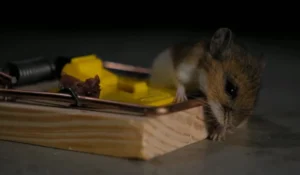
Dead rat smell removal in Prescott, AZ
Deer mice, packrats, or something worse decomposing in your attic, wall, or crawl space.Want Dead Rat Smell Removal in Prescott We find it, remove it, and treat it — the same day you call.
Hantavirus alert — deer mice around Prescott National Forest carry Sin Nombre hantavirus in carcasses and dried droppings. Roughly 1 in 3 confirmed Arizona cases has been fatal. Don’t sweep or vacuum without an N95/P100 respirator. Read the full protocol →
What’s happening inside your home right now
Decomposition speed depends on temperature — and Prescott’s high-desert climate moves faster than most people expect, even at 5,400 feet.
In summer — June through August, with monsoon humidity from July into September — a dead mouse or rat begins producing noticeable odor within 2–4 days. Peak smell arrives by day 5–8, and full decomposition wraps up in 2–3 weeks. Moist monsoon air actually speeds this up compared to Phoenix’s dry heat.
The smell doesn’t end when the carcass is gone. Body fluids that soaked into insulation or subfloor material keep producing odor for another 1–2 weeks — a total window of roughly 4–5 weeks from death.
In a closed-up winter cabin — Prescott lows regularly hit the low-to-mid 20s°F — decomposition can stall completely until temperatures climb again in spring, arriving all at once as an unexplained surprise.
Where dead rodents hide in Prescott homes
Local construction and local species both shape the search — because it isn’t always “just a mouse.”
Attic insulation
Deer mice move easily from forest-edge lots into attic vents. Smell peaks in early morning after the roof bakes all afternoon in direct sun.
Interior wall cavities
Odor concentrates near outlet plates and switch covers as trapped wall-cavity air escapes into the room.
Garages & engine bays
Packrats build stick-and-cactus nests inside engine bays — a distinctly local problem beyond typical house mice.
Firewood stacks
Wood piled against an exterior wall for winter heat is one of the most reliable rodent magnets we see locally.
Crawl spaces & middens
Stem-wall crawl spaces on rocky lots attract woodrat middens — decades-old nests that can hide a carcass in the material itself.
HVAC & evaporative coolers
Monsoon-displaced rodents entering through duct gaps circulate odor evenly through every room when the system runs.
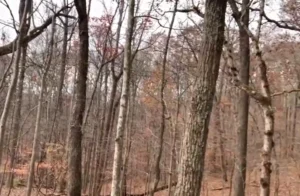
A large share of Prescott homes burn wood for supplemental winter heat. Firewood stacked directly against a house or garage wall is one of the most reliable rodent magnets we find locally — both deer mice and packrats nest in and under it, and a carcass there can smell like it’s coming from inside the house even when the source is outside.
Part-time homes, monsoon storms, and the forest edge
Prescott doesn’t have Lake Tahoe’s ski-town vacancy pattern — but it has its own version of the same risk.
A meaningful share of homes in Groom Creek, Walker, and along the Iron Springs Road corridor are weekend or seasonal properties for Phoenix-metro owners escaping the summer heat — occupied only a few days a month. Add Prescott’s large full-time retiree population, many of whom travel for weeks or months at a stretch, and a lot of homes go unchecked through exactly the window when rodent activity peaks.
The emergencies we see most often trace back to one decision: rodenticide bait placed before a vacancy. Poisoned rodents die disoriented, often far from where the bait was placed — inside a wall, a midden, or HVAC ductwork — with nobody present to notice for weeks.
“We use zero rodenticide. Mechanical snap trapping produces a retrievable body at a known location, removed the same day.” — No hidden carcasses, no wall-void surprises
What hantavirus means for a dead rodent in Prescott
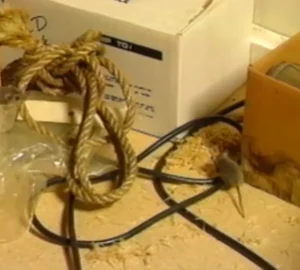
Deer mice carry Sin Nombre hantavirus in their carcasses and in the dried droppings surrounding wherever they nested. Disturbing that dried material without respiratory protection — sweeping, vacuuming, or shaking out insulation — is the primary documented way people get infected.
We haven’t found a documented hantavirus case tied specifically to Yavapai County — but the deer mouse population surrounding Prescott is dense, confirmed cases cluster in nearby northern Arizona counties, and the exposure mechanism is identical everywhere the species lives.
Never do this
- Bare hands, no gloves
- Standard shop vacuum or broom
- No respirator in attic or crawl space
- Disturb a midden before wetting it down
Safe protocol
- N95 or P100 respirator, fitted
- Nitrile gloves throughout
- 10% bleach on droppings before disturbing
- HEPA vacuum, double-bag, enzyme treatment
What we do when you call
Same-day priority across Greater Prescott. Weekend and seasonal cabin owners don’t need to be present.
Phone assessment
Where’s the smell strongest, and does it change with the AC or heat? We build a location hypothesis before we arrive.
On-site odor mapping
Systematic checks from every accessible point — attic, crawl space, outlets, woodpiles, garage. Fly activity often locates the carcass faster than smell alone.
Hantavirus-safe removal
P100 respirator, bleach pre-treatment, HEPA vacuum, enzyme deodorizer. Minimum-damage access if a wall or subfloor cut is required.
Enzyme deodorizer
Breaks down decomposition compounds at the molecular level — the step that actually ends the smell instead of masking it.
Entry point ID
Every call is evidence of an entry point. We quote exclusion work so it doesn’t happen again.
Areas We Serve Around Prescott
Groom Creek & Walker
Highest deer mouse density locally, plus regular packrat midden calls.
Iron Springs Road
Woodpile and engine-bay packrat calls are common here.
Williamson & Skull Valley
Large lots bordering desert and ranch land — prime packrat territory.
Country Club & StoneRidge
Consistent water and vegetation support higher rodent populations.
Downtown Prescott
Older wood-frame housing stock, year-round attic and wall calls.
Prescott Valley & Chino Valley
New subdivisions bordering disturbed land, spikes after monsoon storms.
Dead rat smell removal in Prescott
How long will the smell last if I don’t find the carcass?
Is it a rat, a mouse, or a packrat?
Why does the smell get worse when the AC or cooler runs?
Is it safe to stay in the house while waiting?
I found a packrat midden — hantavirus risk too?
A monsoon storm just hit — is that connected to the smell?
That smell won’t wait. Neither should you.
Same-day emergency response across Greater Prescott · Weekend cabin & absentee owner coordination · Zero rodenticide
📞 (928) 327-7696 — Call Now