Pack Rat in Prescott, AZ
Pack rats (Woodrat) are one of Prescott’s most persistent rodent problems, especially around rock walls, wood piles, sheds, open land, and parked vehicles. Learn how to identify a midden, recognize vehicle damage, understand health risks, and stop pack rats from returning.
Why Pack Rats Thrive Around Prescott Homes
If you live near open land, national forest, a rock wall, or a wood pile anywhere around Prescott, you’ve probably already encountered a pack rat — even if you didn’t know what you were looking at.
The pack rat, also called a woodrat or trade rat, is a native desert and woodland rodent. Several Neotoma species overlap around Prescott, with white-throated woodrats common in the region and other species occurring at higher, pine-forested elevations.
Unlike roof rats and Norway rats, which are non-native species, pack rats have been part of this landscape for thousands of years. Their natural ability to use rocks, brush, wood piles, and sheltered spaces makes today’s homes, sheds, garages, and parked vehicles easy extensions of their habitat.
Granite boulders, pinyon-juniper cover, wood piles, landscaped yards, and properties bordering Prescott National Forest create abundant natural shelter close to residential structures.
What attracts pack rats to a property?
The One Field ID Test That Always Works
When you’re trying to identify a rodent around a Prescott home, start with the tail. It is one of the quickest visual clues for separating a pack rat from a roof rat or Norway rat.
Look for a Fully Furred Tail
A pack rat’s tail is covered in fur or long hairs. It should look soft and furry rather than smooth, naked, or scaly.
Scaly-Looking Tail
Roof rats and Norway rats have tails that appear much less furry and more visibly scaly compared with a pack rat’s soft, hairy tail.
A pack rat’s tail is fully covered in fur — not scaly or naked-looking.
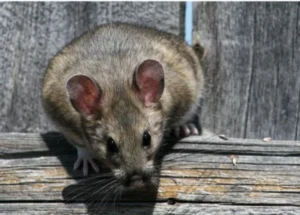
Combine the tail with large dark eyes, rounded ears, thick soft fur, and a pale underside for a more confident identification.
What Does a Pack Rat Look Like?
Pack rats have a noticeably softer, fuller appearance than roof rats or Norway rats. Look for these physical traits when identifying one around a Prescott property.
Pack rats have large, prominent eyes that stand out against their relatively rounded facial profile.
Their ears are noticeably rounded and relatively large compared with the head.
Fur ranges from gray to cinnamon-brown and often gives the animal a softer, cleaner appearance than a typical roof or Norway rat.
The underside is typically lighter than the back, providing another useful clue when several features are visible.
Pack rat appearance can vary. Tail texture, body shape, nesting behavior, and the presence of a stick-and-debris midden are more useful when confirming the species.
The Midden Is the Giveaway
Pack rats don’t simply make a nest and leave. They build, reuse, expand, and defend sheltered nesting sites — creating one of the easiest signs of pack rat activity to recognize around a Prescott property.
Sticks, cholla, bark and whatever else is nearby
Pack rats build large, obvious nests called middens from sticks, cactus segments, bark, and loose debris. Cholla cactus is a common building material, and items from garages and sheds can sometimes become part of the structure.
Inside, the midden can contain separate areas for sleeping, food storage, a nursery, and waste. The site may then be reused and expanded rather than abandoned after a single nesting period.
Urine and accumulated organic material can harden portions of an established midden into a dense mass that may remain in place for years.
Why clearing the visible nest may not solve the problem
Collect
Sticks, cholla, bark and loose materials are gathered from the surrounding area.
Build
Materials are assembled into a protected midden with different internal spaces.
Reuse
Established sites can be reused and expanded rather than abandoned after one nesting period.
Rebuild
If access remains open, clearing visible material alone can allow pack rat activity to return.
Why Vehicles Are a Magnet for Pack Rats
An engine bay provides almost everything a pack rat wants: warmth, darkness, shelter, and convenient nesting material.
Damage can involve wiring harnesses, insulation, soundproofing and other engine-bay components.
If the entry point and surrounding conditions remain accessible, pack rat activity can return. Effective control should address the animal, access point, and conditions that make the location attractive.
Signs of Pack Rat Activity
Pack rats can leave several clues around a Prescott property. Look for these signs around garages, sheds, vehicles, walls, crawlspaces, and areas of dense landscaping.
One sign may not tell the whole story. Several signs appearing around the same area are more useful when identifying an active pack rat site.
Stick & Debris Midden
A visible stick-and-debris pile against a wall, wood pile, shed, or vehicle undercarriage.
Chewed Wiring & Insulation
Chewed or missing insulation on vehicle wiring, hoses, or soundproofing.
Large Oblong Droppings
Large, oblong droppings, distinct from the smaller rod-shaped droppings of mice.
Musky Odor
A strong, musky ammonia-like odor near an active midden.
Nighttime Scratching
Scratching or rustling sounds at night near sheds, garages, or crawlspaces.
Missing “Shiny” Items
Bottle caps, small tools, jewelry, and other objects turning up in odd places — classic pack rat hoarding behavior.
Multiple clues around the same area can point to an active pack rat site. Check nearby walls, wood piles, sheds, vehicles, crawlspaces, and other sheltered areas.
Do Not Handle an Old Midden Bare-Handed
Never clear a pack rat midden bare-handed or without a respirator. Old middens can harbor kissing bugs, a blood-feeding insect that can transmit Chagas disease and trigger severe allergic reactions in sensitive individuals — a documented risk specifically associated with pack rat nests in Arizona.
Disturbed nesting material can also aerosolize droppings and urine residue, carrying plague and tularemia exposure risk. Gloves, an N95 or better respirator, and professional removal are strongly recommended for any midden larger than a small, fresh accumulation.
Disease Risk Specific to Pack Rats
Pack rats can be associated with several disease and exposure pathways in Arizona. The risk depends on contact with rodents, fleas, ticks, nesting material, and contaminated dust.
Tularemia
WILD RODENT / FLEA & TICK EXPOSUREPack rats are among the wild rodents that can carry and transmit tularemia, through direct contact, bites from infected fleas or ticks living in the midden, or inhaling contaminated dust when a nest is disturbed.
Plague
FLEA-BORNE EXPOSURELike other wild rodents in this region, pack rats can carry fleas capable of transmitting Yersinia pestis. Rural Yavapai County is under active public health monitoring for plague activity, and outdoor pets that investigate rodent burrows or middens can create a household exposure pathway.
Kissing Bugs
CHAGAS DISEASE VECTORThis is the risk most homeowners don’t know about. Pack rat middens are a documented breeding site for kissing bugs (Triatoma spp.) in Arizona. A midden built against or under a home gives these insects a path indoors, where bites can trigger anything from mild irritation to a serious allergic reaction, and in rare cases transmit Chagas disease.
Arenaviruses
WILD RODENT CARRIERSome pack rat species, including the white-throated woodrat common in this region, have been documented as carriers of arenaviruses capable of occasionally infecting humans, reinforcing the same no-bare-hand-contact rule that applies to any wild rodent nest.
Disturbing an old midden can expose you to contaminated dust, droppings, urine residue, fleas, ticks, and insects associated with the nest.
What Pack Rat Damage Costs a Prescott Property
Pack rat damage can range from a small irrigation repair to a major vehicle wiring replacement. These are some of the most common damage patterns found around Prescott properties.
Vehicle Wiring Harnesses
ENGINE BAY · PARKED VEHICLESThe most common and often the most expensive pack rat damage locally. A single nesting event in an engine bay can mean a full harness replacement.
Structural & Garage Wiring
GARAGES · SHEDS · CRAWLSPACESPack rats gnaw exposed wiring in garages, sheds, and crawlspaces for the same reason they target vehicles: continuous incisor growth requires constant gnawing.
Irrigation Lines & Landscaping
DESERT LANDSCAPING · YARDSDrip lines and buried irrigation tubing near an active midden are a frequent chew target in Prescott’s desert-landscaped yards.
Fire Risk From Dry Midden Material
STRUCTURES · GARAGES · WIRINGA large midden built against a structure, combined with exposed gnawed wiring, creates a real ignition risk, particularly during Prescott’s dry pre-monsoon months.
A pack rat may cause little visible damage while damaging wiring, irrigation, or other components hidden from view.
Pack Rat in Prescott
Clear answers to the questions Prescott homeowners ask most often about pack rats, middens, damage, and removal.
01 Why does the pack rat keep coming back after I clear the nest out? +
Because you likely removed the visible material but not the rat, the entry point, or the scent marking that draws the next rat to the same spot. Middens are also frequently reused across generations — if the site itself, such as a rock crevice, wall cavity, or engine bay, isn’t sealed or made inaccessible, expect a rebuild within weeks.
02 Are pack rats actually dangerous to touch, or is that overblown? +
It’s a real risk, not overblown. Beyond the general rodent-borne disease risks such as plague, tularemia, and salmonella, pack rat middens specifically are known breeding sites for kissing bugs, which is a risk most other rodent species don’t carry.
Gloves and a respirator are the minimum precaution for handling any midden material.
03 Will pack rats nest in my garage even if there’s no food source in there? +
Yes. Pack rats aren’t primarily food-driven the way house mice are — they’re shelter- and material-driven. A garage, shed, or engine bay offers warmth, darkness, and nesting material such as insulation, cardboard, and fabric, which can be enough to attract a pack rat regardless of food access.
04 How is a pack rat different from a roof rat if they’re both called “pack rats” by some people locally? +
They’re unrelated species with very different behavior. A pack rat is ground-dwelling, native to the region, and builds a visible stick midden; it rarely climbs into an attic.
A roof rat is a non-native, agile climber that nests in trees and attics and doesn’t build middens. If your activity is at ground level around rocks, wood piles, or vehicles, it’s more likely a pack rat. If it’s overhead in the attic or eaves, it’s more likely a roof rat.
Pack Rat Confirmed — Ready to Act?
Get the nest removed, vulnerable areas protected, and entry points addressed before the problem becomes a larger repair.